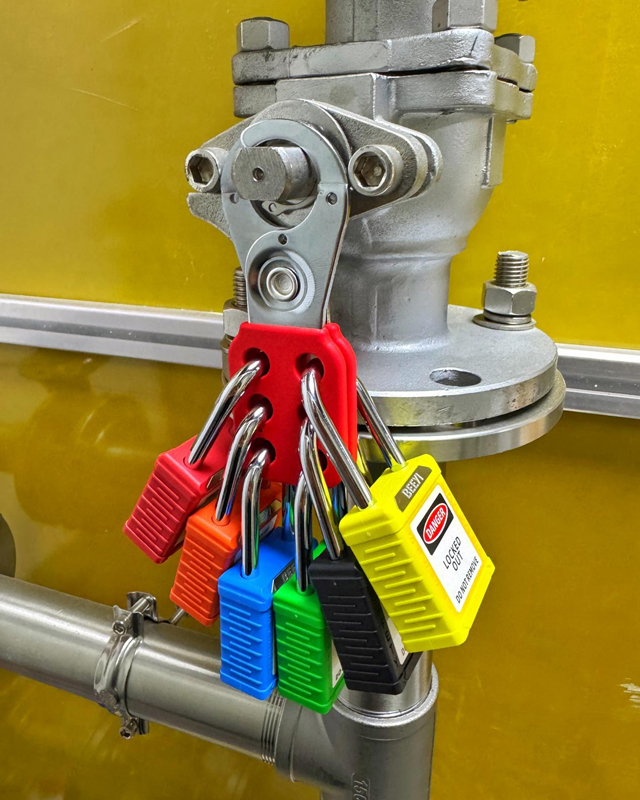

Maintenance work often involves direct contact with machinery, which may still be connected to hazardous energy sources. This is where Lockout/Tagout (LOTO) plays a vital role. It acts as a safety barrier, isolating workers from the dangers of unexpected energy release during repairs.
If equipment is not properly isolated, even a minor slip could lead to electric shock, crushing injuries, or exposure to hazardous liquids. LOTO procedures ensure that all energy sources—whether electrical, hydraulic, pneumatic, or thermal—are completely neutralized before any work begins.
LOTO is especially important in industries such as manufacturing, utilities, oil and gas, food processing, and construction, where machinery is large, powerful, and often complex. For example, if an electrician is working on a conveyor motor and another worker unknowingly restarts the system, the electrician could be seriously injured. With LOTO, such incidents are virtually eliminated.
From a practical standpoint, the procedure gives maintenance teams full control over the status of equipment. Workers can service machinery with peace of mind, without fearing accidental startup. It also helps streamline communication across shifts, departments, and contractors, ensuring everyone knows which equipment is off-limits and why.
Simply put, Lockout/Tagout transforms potentially hazardous maintenance tasks into controlled, structured processes. It’s not just about turning a machine off—it’s about keeping it safely and reliably off until the job is done.