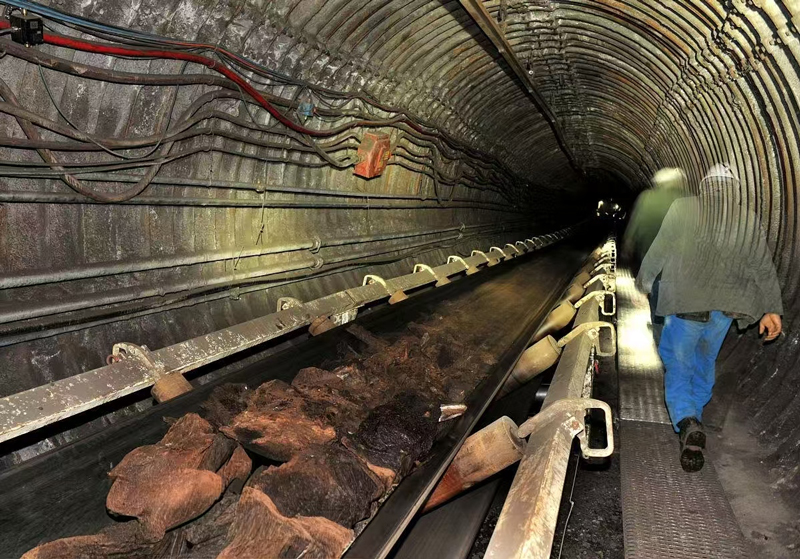

Imagine this: hundreds of meters underground in a mine, a maintenance worker is repairing a huge conveyor belt drum. At that very moment, someone on the surface, unaware that someone is working below, casually flips the power switch back on. The consequences would be catastrophic. This is not a paranoid fantasy—throughout mining history, such "unexpected startups" have caused countless tragedies, resulting in amputations and even death.
To prevent these "what if" scenarios, the mining industry has developed a measure that seems simple but is extraordinarily effective: LOTO (Lockout/Tagout). It is hailed as the "gold standard" of mining safety, and at its core lies a seemingly humble tool—the safety padlock.
What is LOTO? More Than Just a Lock
LOTO stands for "Lockout/Tagout." It is not just a tool but a systematic energy isolation procedure.
In a mine, the dangers go far beyond electricity. Giant flywheels, hydraulic support arms, and even a shovel bucket suspended by gravity all store immense amounts of energy. The core logic of LOTO is simple: before equipment maintenance or repair, physically isolate all potential energy sources and attach a warning tag, ensuring that no one can restart the equipment without the repair worker's knowledge.
Its principle is straightforward, almost ruthless: Whoever locks it, unlocks it. The maintenance worker places their own lock, and only they have the key. No one else is authorized to remove someone else's lock.
You might ask, "Can't I just turn off the machine? Why do I need to lock it?"The answer is: Because "off" does not equal "safe."
Mining equipment is incredibly large and complex, with multiple types of hazardous energy:
● Electrical Energy: The most common type. Accidental re-energization can cause electric shock or sudden equipment movement.
● Mechanical Energy: Flywheels, springs, and gravity-affected components—even after power is cut, they can suddenly drop or move due to gravity or inertia.
● Hydraulic and Pneumatic Energy: High-pressure oil or gas in pipelines can shoot out like bullets if leaked.
● Chemical Energy: Pressure or corrosive substances inside chemical reaction tanks.
According to data from the U.S. Mine Safety and Health Administration (MSHA), 28 metal/non-metal miners have died from unexpected energy releases since 2005. In Australia, a quarry worker's arm was pulled into the gears of a dryer that hadn't been properly locked out, resulting in amputation. The company was fined 100,000 Australian dollars. These bloody lessons tell us: trust is no substitute for procedure. A verbal "the machine is off" is far from enough.
Implementing LOTO in a mine typically follows six strict steps, with the padlock playing a crucial role throughout:
Step 1: Preparation & Notification
Before maintenance begins, miners must identify all energy sources and notify all affected personnel: "The machine is being serviced. No one touches it."
Step 2: Shutdown
Shut down the machine according to standard procedures.
Step 3: Isolation
Locate the breakers, valves, and other energy isolation points. Now the LOTO padlock enters the scene. Workers use insulated padlocks to lock breakers and valve lockouts to seal pipeline valves, physically disconnecting the equipment from all energy sources.
Step 4: Release Stored Energy
Even after locking, residual energy may remain. Through discharge, pressure relief, and draining, ensure all energy is completely eliminated.
Step 5: Verification (Try-Out)
This is the most critical step. Workers must personally press the start button to confirm the machine does not move—proving the lock is doing its job. There's a saying in the industry: "If you haven't tested it, you haven't locked it."
Step 6: Perform Work & Unlock
After maintenance is complete, whoever locked it unlocks it. Clean up, ensure all tools are collected, confirm no one is inside, then remove locks and tags before restoring energy.
Ordinary household padlocks cannot handle the demands of a mining environment. Mining LOTO padlocks have strict safety requirements:
1. High Visibility: They are usually brightly colored (vivid red, bright yellow) and non-keyed-alike. Each maintenance worker should have a unique key to prevent the fatal mistake of "your key opens my lock."
2. Durability: Mines are humid, dusty, and corrosive. Lock bodies must be made of corrosion-resistant materials (steel, brass, or specialized nylon), and tags must be waterproof and fade-resistant—they cannot fail due to harsh conditions.
3. Group Lockout (Hasp): When multiple people work on the same machine, a device called a "hasp" (or "lockout hasp") is used. It allows multiple padlocks to secure the same energy source simultaneously. The equipment can only be re-energized when every single person has removed their lock. This prevents the tragedy of "some people are still inside, but others have already come out."
In modern mines, LOTO is no longer just a pile of locks and tags—it's even integrated with digital software. Managers can monitor in real-time who has locked out which piece of equipment. But no matter how much technology evolves, those padlocks hanging on switches remain a miner's most direct "amulet" in the dark underground.
As the Canadian province of Ontario noted when reporting a miner's death caused by failure to release "residual energy": Strictly following LOTO procedures is not just a regulatory requirement—it is a matter of respect for life.
A LOTO lock doesn't lock up cold machinery—it locks away the hand of death that, once unleashed, can never be recalled. In the high-risk world of mining, every act of bending down to hang a lock is a ritual in which a miner places safety firmly in their own hands.